


Hoi An
The moment you cross into the old town, the traffic noise drops away and something quieter takes over the soft creak of wooden shutters, the smell of incense drifting from a doorway, the low murmur of the river moving past stone steps.
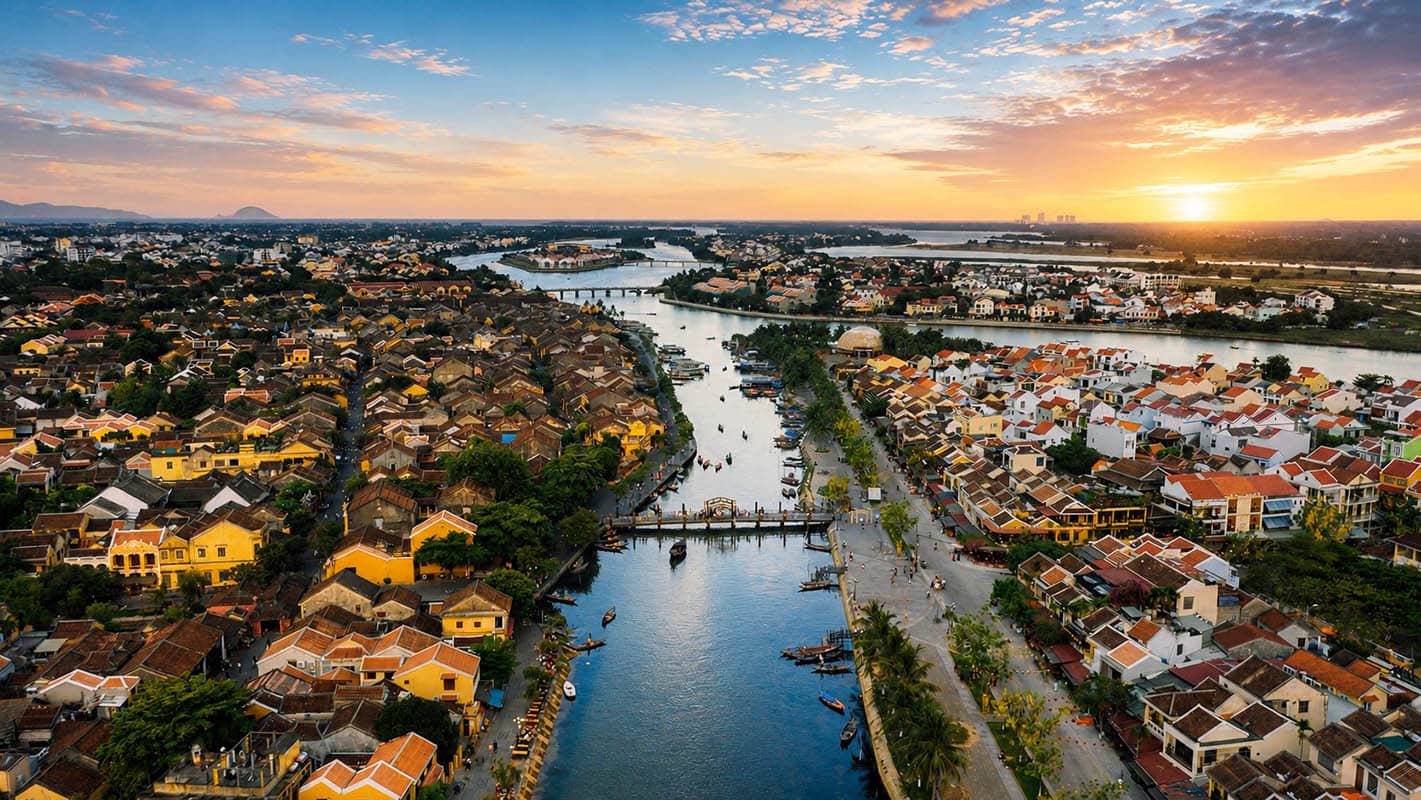
Hoi An does not feel like a city so much as a memory that someone has kept carefully intact. This was one of Asia’s busiest trading ports once, centuries ago, and the shape of that history still lingers — narrow streets lined with mustard-yellow houses, their walls stained by decades of rain and salt air. Lanterns hang from balconies even in daylight, waiting for evening, when they’ll turn the whole town gold. Cars and motorbikes are mostly kept outside the centre, so people walk, and the pace of the town walks with them.
The mornings belong to the locals. Wooden boats move slowly along the river, the market wakes a little at a time, women in conical hats calling out prices for fish still wet from the water. The air smells faintly of coriander and charcoal smoke drifting from a nearby kitchen cao lau, thick noodles in a broth you won’t find quite the same anywhere else, the recipe tied to a well the town swears makes all the difference. White rose dumplings show up on almost every menu. Banh mi vendors line certain corners, each with loyal customers who’ll walk past two other stalls to get to theirs.
By afternoon, tailors work behind open shopfronts measuring, cutting, stitching garments that somehow seem to appear overnight. Next-day suits and dresses, fabric chosen from walls of silk and linen, fittings by evening. It feels a little improbable, and entirely part of Hoi An.
The Japanese Covered Bridge sits quietly at the edge of the old quarter, smaller than most visitors expect, its wooden beams worn smooth by centuries of hands. Beyond it, temples and old merchant houses keep their doors open, dark wood cooled by shade, incense curling up toward the roof beams.
Then evening arrives, and Hoi An changes completely. The heat softens, lanterns take over red, gold, some shaped like flowers their reflections drifting across the Thu Bon River. Small paper boats carrying candles float through the dark, sold by kids for a few thousand dong. The whole town seems to hold its breath a little once the sun goes down, then exhale into light. If your dates line up, try to catch the monthly Lantern Festival the 14th day of the lunar calendar, when the electric lights go off entirely and the streets run on candlelight alone.
Just outside town, An Bang Beach offers something Hoi An itself doesn’t quiet sand, plastic beach chairs, someone selling grilled squid from a cart that appears right around sunset.
Stay a couple of nights if you can. Some places are memorable because of what you do there. Hoi An is memorable because of how it makes you slow down.
Best time to go: February–April for warm, dry weather with lower humidity. Avoid October–November, when flooding is common in the old town.
From Da Nang: about 30–45 minutes by car; Da Nang International Airport is the closest.
Good to know: the old town charges a small entrance ticket covering several historic sites. Best explored on foot or by bicycle — many streets close to traffic in the evening. Bring shoes you can slip off easily; some temples and houses ask you to remove them at the door.
Vietnam Luxury Escapes can create a tailor-made journey to Hoi An, combining ancient streets, tailored fashion and authentic local experiences. Read our guest reviews on Tripadvisor.
Speak to someone who's been there

Our itineraries offer inspiration for exploring Hoi An, while every journey we create is carefully tailored to your interests, passions and style of travel.
Bai Tu Long Bay ⟩ Con Dao
Bai Tu Long Bay ⟩ Ha Long Bay
Bai Tu Long Bay ⟩ Da Nang
Bai Tu Long Bay ⟩ Hue
Bai Tu Long Bay ⟩ Hoi An
Bai Tu Long Bay ⟩ Hanoi
Bai Tu Long Bay ⟩ Mui Ne & Phan Thiet
Bai Tu Long Bay ⟩ Phu Quoc Island
Bai Tu Long Bay ⟩ Quy Nhon
Bai Tu Long Bay ⟩ Mekong Delta
Bai Tu Long Bay ⟩ Ninh Binh
Bai Tu Long Bay ⟩ Sapa
Vietnam Travel Inspiration
Our specialists travel regularly throughout Vietnam, uncovering new experiences and sharing their latest recommendations on the best places to stay, dine and explore.